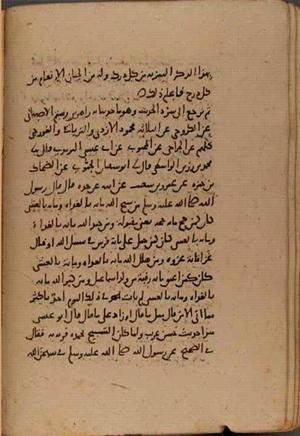
this remembrance he has transcendence beyond every depth, and from the Gardens he has blessing from every degree. Know this.
(The Report concerning the Four Invocations)
We now return to relating the report. Zāhir ibn Rustam al-Iṣfahānī related it to us from al-Karūkhī, from the three: Maḥmūd al-Azdī, al-Tiryāqī, and al-Ghūrjī, all from al-Jarrāḥī, from al-Maḥbūbī, from Abū ʿĪsā al-Tirmidhī.
He said: Muḥammad ibn Razīn al-Wāsiṭī related to us, saying: Abū Sufyān al-Ḥamawī related to us from al-Ḍaḥḥāk ibn Ḥamza, from ʿAmr ibn Shuʿayb, from his father, from his grandfather, who said: the Messenger of God, God's blessings and peace be upon him, said:
‘Whoever glorifies God a hundred times in the morning and a hundred in the evening is like one who has performed a hundred pilgrimages’—meaning accepted ones.
‘Whoever praises God a hundred times in the morning and a hundred in the evening is like one who has provided a hundred horses in God's path,’ or he said, ‘campaigned in a hundred campaigns.’
‘Whoever declares God's oneness a hundred times in the morning and a hundred in the evening is like one who has emancipated a hundred slaves from Ishmael's descendants.’
‘Whoever magnifies God a hundred times in the morning and a hundred in the evening, no one on that day brings more than he brings except one who says what he says or adds to what he says.’
Abū ʿĪsā said: ‘This is a ḥasan, gharīb report—a good, uncommon report.’
(Glorification, Praising, and the Balance)
Since glorification with His praise is nearness through Him[22], it is related in the sound report from the Messenger of God, God's blessings and peace be upon him, concerning ‘Glory be to God
Notes
[22]
(The author comments here on the report, linking praising to the balance's completion and to its late position in the ordering of invocations.)