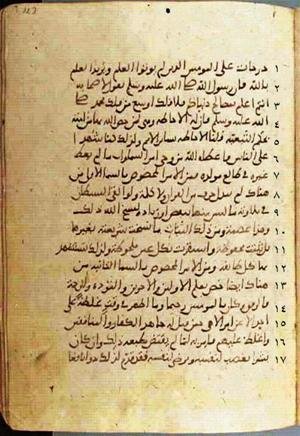
For he, may God bless him and grant him peace, was a prophet while Adam was between water and clay, as we have established and in the manner we have explained. He was devoted exclusively to his Lord, attending to no created being alongside Him, since his occupation with God diverted him from it. The prophet is occupied with receiving from God and observing proper courtesy, and has no leisure for anything beneath Him.
God therefore made women beloved to him, and he loved them through God’s providential care for them. He, may God bless him and grant him peace, loved them because God had made them beloved to him. Muslim relates in the chapters on faith in his Sahih that a man said to God’s Messenger, peace be upon him, “I like my sandal to be beautiful and my garment to be beautiful.” The Messenger, may God bless him and grant him peace, replied, “God is beautiful and loves beauty.”
From this heaven also comes love of perfume. Marriage, rather than celibacy, was his practice. He made sexual union an act of worship because of the divine secret deposited within it, which is found only in women: the manifestation of entities through the three governing factors already mentioned in the production of a conclusion from two premises and the link He made the cause of that production.
This excellence, and what resembles it, belongs to Muhammad’s particular distinctions, may God bless him and grant him peace. An additional privilege was marriage by gift. Likewise, in the provisions concerning marriage that he explained to his community, he permitted a man with nothing to offer as a marriage payment to marry specifically on the basis of what he had memorized of the Qur’an—not on his teaching it to her. Although this does not have the full force of marriage by gift, it contains—
Notes
Translator’s note TN570-1: “Marriage by gift” refers here to a woman’s offering herself in marriage to the Prophet. The concluding sentence expressly bases the other marriage on the man’s memorized Qur’an and excludes teaching it to the woman; this distinction is retained as stated.