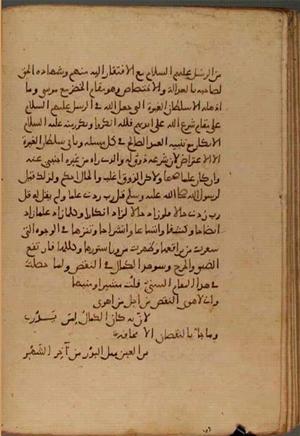
by the messengers, peace be upon them, despite their need for it and the Real’s testimony to its possessor’s uprightness and special election. It is al-Khidr’s station with Moses.
What bewildered him was only the authority of protective jealousy God placed in the messengers, peace be upon them, over the station of the law God prescribed through them. For God’s sake they objected. His objection, peace be upon him, recurred despite the righteous servant’s warning on every matter. The authority of protective jealousy insists upon objection, for his law is a tasting to him, whereas what he sees from another is foreign to him, though it is sound knowledge. Tasting is more dominant and the state more governing.
This is why the Messenger of God, may God bless him and grant him peace, was told, “Say, ‘My Lord, increase me in knowledge’” [Ta Ha 20:114], not “Say, ‘My Lord, increase me in state.’” Had he increased in state, he would have increased in objection. Whenever he increased in knowledge, he increased in clarity, unveiling, breadth, openness, and wandering freely among the faces unveiled from their coverings and appearing from behind their curtains and canopies. Constriction and hardship were lifted, and perfection was witnessed in deficiency.
When I attained this lofty station, I said, indicating and drawing attention:
I love deficiency for the sake of the one I love,
for through it came perfection for the one who knows.
He brought deficiency only for fear
of the eye, like the full moon at the month’s end.
Notes
Translator’s note TN4367-1: The discussion first concerns Moses’ objections in his encounter with al-Khidr, then addresses the command given to Muhammad. In the last couplet, the unexpressed subject and “fear of the eye” remain compressed; the latter may evoke the envious eye. The moon image continues on the next page.