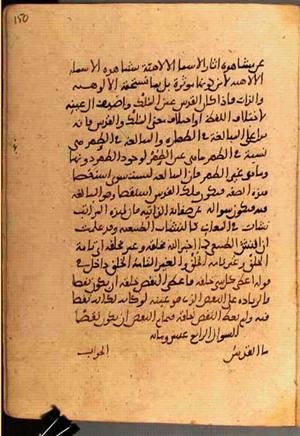
from witnessing the effects of the divine names through witnessing the divine names, not insofar as they exert effects, but through what divinity and the Essence deserve. If holiness is the very dominion, and is ascribed to its own entity because the expression differs, or because the meanings of dominion and holiness differ, it indicates intensification in purity. Intensification in purity is a relation within purity, not purity itself, because purity exists without it; nor is it other than purity, for intensification is nothing but the complete realization of this attribute. The dominion of holiness is thus complete realization, namely intensification in it. His question would then concern its essential attributes. These ranks have constitutions within meanings, like natural constitutions. You know that natural formation, as God reported, is “formed and unformed” [al-Hajj 22:5]: that is, complete in formation and incomplete in formation. The incomplete in formation is included in His saying, “He gave each thing its creation” [Ta Ha 20:50]. He gave deficiency its creation as deficiency. If an addition were made to deficiency, which is its very entity, it would be a deficiency in it, and deficiency would not have been given its creation. The completeness of deficiency is thus to be deficiency.
The One Hundred and Fourteenth Question: What is holiness?
The answer:
Notes
Translator’s note TN3736-1: The argument gives deficiency its own completeness as deficiency. Adding what would remove that deficiency would impair its being the particular reality it is; the paradoxical wording is retained.