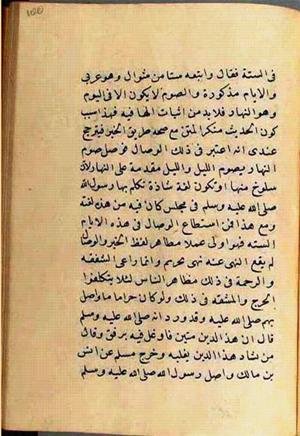
in “six.” He said, “and follows it with six of Shawwāl.” He was an Arab, and “days” is masculine. Fasting can take place only in the day, meaning daylight, so the hāʾ must be included in the number. This makes the hadith objectionable in its wording despite the soundness of the report’s transmission. I therefore find it more likely that he considered continuous fasting, joining the daytime fast to a nighttime fast. The night precedes the day, since the day is stripped from it. Or it may be a rare dialect in which the Messenger of God, may God bless him and grant him peace, spoke in a gathering where someone used that dialect.
Nevertheless, anyone able to fast continuously through these six days should preferably do so, acting on the apparent wording of the report. Continuous fasting was not prohibited as unlawful. The concern was compassion and mercy for people in their outward condition, lest they impose hardship and difficulty on themselves. Had it been unlawful, he, may God bless him and grant him peace, would not have fasted continuously with them. It is reported that he, may God bless him and grant him peace, said, “This religion is firm, so enter deeply into it gently.” He said, “Whoever contends with this religion will be overcome by it.”
Muslim transmitted from Anas ibn Mālik: The Messenger of God, may God bless him and grant him peace, fasted continuously
Notes
Translator’s note TN2724-1: The argument turns on the numeral sittan, which lacks the hāʾ present in sittatan (sittah before inflection). The author reads the absent hāʾ as allowing a reference to nights, and thus to fasting continuously through both day and night. His assessment of the wording and the alternative explanation by dialect are retained.