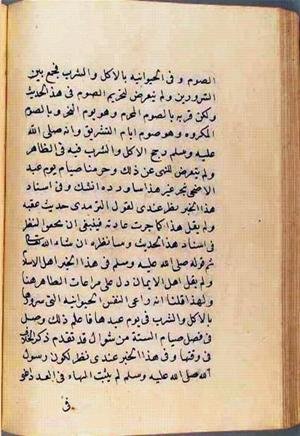
fasting, and in the animal soul by eating and drinking. He thus joins the two joys.
In this hadith he did not address the prohibition of fasting, but joined it to fasting that is forbidden, on the day of sacrifice, and fasting that is disapproved, on the days of Tashrīq. He, may God bless him and grant him peace, gave eating and drinking outward precedence in it without addressing a prohibition. We hold fasting on Eid al-Aḍḥā forbidden on the basis of another report, which I shall give, God willing.
In my view the chain of this report needs examination, because al-Tirmidhī says “the hadith of ʿUqbah” and does not say “this,” as is his custom. The chain of this hadith should therefore be carefully examined, and I shall examine it, if God, exalted is He, wills. His saying, may God bless him and grant him peace, “the people of Islam,” rather than “the people of faith,” indicates that the outward is considered here. This is why we said that he considered the animal soul, whose joy on its festival day lies in eating and drinking. Know this.
Continuation on Fasting the Six of Shawwāl
We have already mentioned the disagreement over their time. In my view, this report needs examination because the Messenger of God, may God bless him and grant him peace, did not include the hāʾ in the numeral, by which I mean
Notes
Translator’s note TN2723-1: The author distinguishes the report’s indication from an explicit prohibition, then questions its chain on the basis of al-Tirmidhī’s wording. The next page develops his separate grammatical reservation about the numeral in the report on Shawwāl.