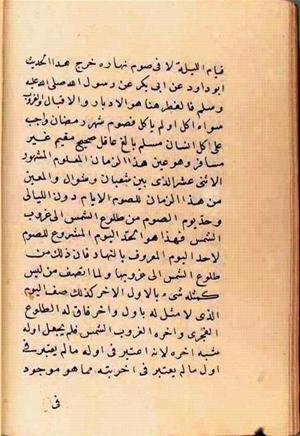
standing in prayer by night, leaving the daytime fast outside it. Abū Dāwūd included this hadith from Abū Bakra, from the Messenger of God, may God bless him and grant him peace.
Breaking the fast here is the day’s departure, the night’s arrival, and sunset, whether he eats or not.
(The Bounds of the Fasting Day)
Fasting the month of Ramadan is obligatory for every Muslim who has reached puberty, is sane, healthy, resident, and not traveling. It is this familiar, well-known, specified time among the twelve months, between Shaʿbān and Shawwāl. Within it, the days are assigned to fasting. The fasting day extends from dawn until sunset. This is the day prescribed for fasting. The familiar day called daytime extends from sunrise until sunset.
Since the One of whom “There is nothing like Him” [al-Shura 42:11] is said is described as the First and the Last, fasting, which has no likeness, is likewise described as having a first and a last. Its first is dawn’s rising and its last the sun’s setting. He made its beginning different from its ending. He considered in its beginning something He did not consider in its ending, although it is present