
Futmak · الفتوحات المكية · Meccan Revelations

The Meccan Revelations

Manuscript volume 9 · Page 29

Konya manuscript

Open Arabic sourceOpen English translation

Arabic

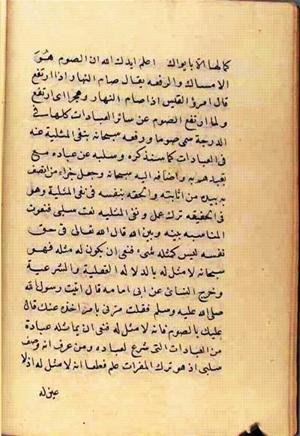
كمالها إلا بإيواك‏

اعلم، أيدك الله، أن الصوم هو الإمساك والرفعة؛ يقال صام النهار إذا ارتفع. قال إمرؤ القيس: «إذا صام النهار وهجرا»، أي: ارتفع.

ولما ارتفع الصوم عن سائر العبادات كلها في الدرجة سمي صوما. ورفعه سبحانه بنفي المثلية عنه في العبادات كما سنذكره، وسلبه عن عباده مع تعبدهم به وأضافه إليه سبحانه وجعل جزاء من اتصف به بيده من إثابته[6] وألحقه بنفسه في نفي المثلية.

وهو في الحقيقة ترك لا عمل، ونفي المثلية نعت سلبي؛ فتقوت المناسبة بينه وبين الله. قال تعالى في حق نفسه: ﴿لَيْسَ كَمِثْلِهِ شَيْءٌ﴾ [الشورى: ١١]؛ فنفى أن يكون له مثل؛ فهو سبحانه لا مثل له بالدلالة العقلية والشرعية.

وخرج النسائي عن أبي أمامة قال: أتيت رسول الله صلى الله عليه وسلم فقلت: «مرني بأمر آخذه عنك». قال: «عليك بالصوم؛ فإنه لا مثل له». فنفى أن تماثله عبادة من العبادات التي شرع لعباده.

و من عرف أنه وصف سلبي، إذ هو ترك المفطرات، علم قطعا أنه لا مثل له؛ إذ لا

Notes

[6]

(صُححت «إثابته» بمقابلة الطبعة الأحدث، في سياق تولي الحق جزاء الصائم.)
English

perfection lay only in sheltering you.

Know, may God support you, that fasting, ṣawm, means abstention and elevation. One says that the day ṣāma when it rises high. Imruʾ al-Qays said, “When the day is high and blazes,” meaning that it rises.

Fasting is called ṣawm because it rises in rank above all other acts of worship. He, glory be to Him, elevated it by denying that it has any likeness among acts of worship, as we shall mention. He removed it from His servants even while requiring them to worship through it, ascribed it to Himself, and took into His own hand the recompense of the one characterized by it.[6] He joined it to Himself in having no likeness.

In reality it is abstaining, not acting, and having no likeness is a negative attribute. Its correspondence with God is thus strengthened. The Exalted said of Himself, “Nothing is like Him” [al-Shura 42:11], denying that He has any likeness. He, glory be to Him, has no likeness according to both rational proof and the revealed law.

Al-Nasāʾī transmitted from Abū Umāmah: I came to the Messenger of God, may God bless him and grant him peace, and said, “Command me to do something I can take from you.” He said, “Take up fasting, for it has no likeness.” He thus denied that any act of worship prescribed for His servants resembles it.

Whoever knows that it is a negative attribute, since it consists in abstaining from what breaks the fast, knows with certainty that it has no likeness, for it has no

Notes

[6]

(The reading “rewarding him” was corrected by comparison with the newer edition, in the context of the Real undertaking the fasting person’s recompense.)

Manuscript imageManuscript volume 9 · Page 29

Arabic and English are linked by the same Konya page ID. Page alignment is approximate; consult the manuscript image for verification.

Cairo source reference

Ibn al-Arabi, The Meccan Revelations — Manuscript volume 9 · Page 29 — https://www.futmak.com/english/konya/pages.php?id=2553&text=both