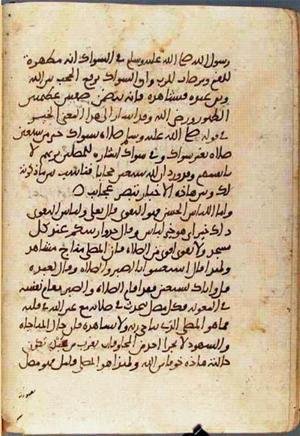
the Messenger of God, may God bless him and grant him peace, concerning the tooth-stick, “It purifies the mouth[24] and pleases the Lord.” The tooth-stick lifts the veils between God and His servant, so that the servant witnesses Him, for it entails two great qualities, purification and God’s good pleasure. The report points to this meaning in his saying, may God bless him and grant him peace, “One prayer with the use of a tooth-stick is better than seventy prayers without it.”
There is an allusion in siwāk for those who pray through their Lord without relying on themselves. It has been related that God has seventy veils. Set what I have mentioned alongside these reports and you will see wonders.
As for fine clothing, it is Godwariness. The Most High says, “The garment of Godwariness, that is better” [al-Aʿraf 7:26], meaning that it is the best garment. He says, “Take your adornment at every place of prostration” [al-Aʿraf 7:31]. There is no stronger Godwariness than prayer, for the one at prayer holds intimate discourse and witnesses. This is why He says, “Seek help through patience and prayer” [al-Baqarah 2:153], and tells His servant to say, “You alone we ask for help” [al-Fatihah 1:5]. He has thus placed prayer and patience in His own place in giving help.
Anyone at prayer who converses in his heart with someone other than God is outside the prayer of the one who holds intimate discourse with his Lord and witnesses Him. For when a servant is in a state of intimate discourse and witnessing, none of the created beings dares come near him, out of fear of God.
For this reason there are few who truly pray. A person may be praying
Notes
[24]
(The text was corrected to “It purifies the mouth” by comparison with the newer edition.)
Translator’s note TN1943-1: The unvocalized word can also be read as siwāka, “other than You.” The text calls attention to an allusion in the word siwāk, “tooth-stick,” when describing people who pray through their Lord.