
Futmak · الفتوحات المكية · Meccan Revelations

The Meccan Revelations

Manuscript volume 1 · Page 98

Konya manuscript

Open Arabic sourceOpen English translation

Arabic

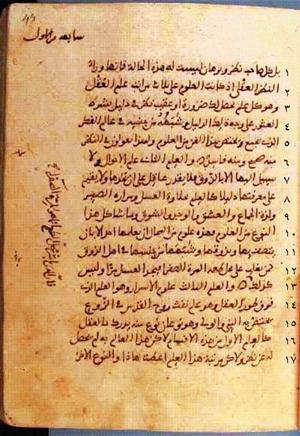
بل كلُّ صاحبِ نظرٍ وبرهانٍ ليست له هذه الحالة؛ فإنها وراءَ النَّظر العقليِّ، إذ كانت العلوم على ثلاث مراتب:

علم العقل

وهو كلُّ علمٍ يحصل لك ضرورةً أو عُقَيْبَ نظرٍ في دليلٍ بشرط العثور على وجه ذٰلك الدَّليل وشَبَهِه من جنسِهِ في عالَمِ الفكر الَّذي يجمع ويختصُّ بهٰذا الفنِّ من العلوم، ولهٰذا يقولون في النَّظر: منه صحيحٌ ومنه فاسدٌ.

(علم الأحوال)

والعلم الثَّاني علم الأحوال، ولا سبيل إليها إلا بالذَّوق؛ فلا يقدر عاقلٌ على أن يحدَّها ولا يُقيمَ على معرفتها دليلاً، كالعِلم بحلاوة العسلِ ومرارة الصَّبرِ ولذَّة الجماعِ والعشقِ والوجدِ والشوقِ وما شاكلَ هٰذا النَّوع من العلوم.

فهذه علومٌ من المُحال أن يعلمها أحدٌ إلاَّ بأنْ يتَّصف بها ويذوقها وشبهها من جنسها في أهل الذَّوْق؛ كمن يغلب على محلِّ طعمه المُرَّة الصَّفراء فيجد العسل مُرّاً وليس كذٰلك، فإنَّ الَّذي باشر محلَّ الطَّعم إنما هو المُرَّة الصَّفراء (وليس العسل).

(علوم الأسرار)

والعلم الثَّالث علوم الأسرار، وهو العلم الَّذي فوق طور العقل، وهو علمُ نفثِ روحِ القُدُس في الرُّوعِ؛[124] يختصُّ به النَّبيُّ والوليُّ، وهو نوعان: نوعٌ منه يُدرك بالعقل كالعلم الأوَّل من هذه الأقسام لكنَّ هٰذا العالِم به لَم يحصل له عن نظر، ولكنَّ مرتبة هٰذا العلم (الذوقي) أعطت (له) هٰذا (الإدراك العقلي).

والنوعُ الآخَر

Notes

[124]

الرَّوع هو الفزع، والرُّوع هو مكانه وهو القلب. (لسان العرب: روع).
English

indeed, every practitioner of reasoning and demonstration who lacks this state. For it lies beyond rational reflection. Knowledge is of three ranks:

Knowledge of the Intellect

This is every knowledge that comes to you necessarily, or following reflection upon a proof, provided that you discover the aspect through which that proof demonstrates its conclusion. Its semblance is of its own kind within the world of thought, which gathers and is specifically concerned with this branch of knowledge. Hence they say that some reasoning is sound and some unsound.

(Knowledge of States)

The second kind is knowledge of states, accessible only through tasting. No rational person can define these states or establish a proof by which they are known: for example, knowing the sweetness of honey, the bitterness of aloes, the pleasure of sexual intercourse, passionate love, ecstasy, longing, and similar kinds of knowledge.

It is impossible for anyone to know these except by being characterized by them and tasting them. Among the people of tasting, their semblance likewise belongs to their own kind: for example, someone whose organ of taste is dominated by yellow bile finds honey bitter, although it is not. What has directly affected the organ of taste is the yellow bile, not the honey.

(The Sciences of Secrets)

The third kind consists of the sciences of secrets: knowledge beyond the intellect’s range, imparted by the Holy Spirit’s breathing into the heart.[124] It is particular to the prophet and the saint, and has two kinds. One is intelligible to reason, like the first division of knowledge, but its knower has not obtained it through reflection. Rather, the rank of this knowledge (through tasting) has bestowed upon him this rational apprehension.

The other kind—

Notes

[124]

Raw means fright; ru means its seat, the heart. (Lisan al-Arab, root r-w-a.)

Translator’s note TN98-1: “Tasting” translates dhawq: direct experiential apprehension. The comparison with taste distinguishes knowing a state by undergoing it from knowing a description of it. The yellow-bile example belongs to the source’s medical vocabulary and illustrates how an experience may be misjudged.

Manuscript imageManuscript volume 1 · Page 98

Arabic and English are linked by the same Konya page ID. Page alignment is approximate; consult the manuscript image for verification.

Cairo source reference

Ibn al-Arabi, The Meccan Revelations — Manuscript volume 1 · Page 98 — https://www.futmak.com/english/konya/pages.php?id=98&text=both