
Futmak · الفتوحات المكية · Meccan Revelations

The Meccan Revelations

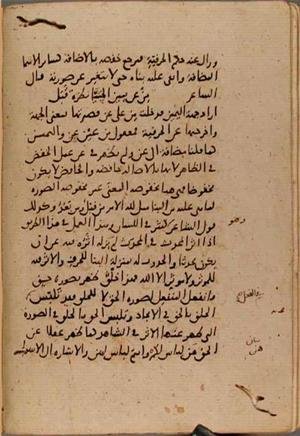
Manuscript volume 32 · Page 125

Konya manuscript

Open Arabic sourceOpen English translation

Arabic

وزال عنه حكم الحرفية، فيرجع خفضه بالإضافة كسائر الأسماء المضافة. وأبقى عليه بناءه حتى لا يتغير عن صورته. قال الشاعر: «من عن يمين الحبيا نظرة قبل[25]»، أراد جهة اليمين، فدخلت «من» على «عن» فصيرتها بمعنى الجهة وأخرجتها عن الحرفية.

فمعقول «من» عين «عن»، واليمين كما قلنا مضافة إلى «عن». ولم يظهر في «عن» عمل الخفض في الظاهر لأنها بالأصالة خافضة، والخافض لا يكون مخفوضا. فهي هنا مخفوضة المعنى غير مخفوضة الصورة لما هي عليه من البناء، مثل: ﴿لِلَّهِ الْأَمْرُ من قَبْلُ ومن بَعْدُ﴾ [الروم: ٤]، وكذٰلك قول الشاعر، وهو كثير في اللسان.

(الحدوث وأثر صورة الحق)

وهٰذا العمل في هٰذا الطريق إذا أثر المحدث في المحدث لم يزله أثره فيه عن أن يكون محدثا، والحدوث له بمنزلة البناء للحرف، والأثر فيه للمؤثر ولا مؤثر إلا الله. فهٰذا خلق ظهر بصورة حق، فانفعل المنفعل لصورة الحق لا للخلق.

فقد تلبس في الفعل الخلق بالحق في الإيجاد، وتلبس الحق بالخلق في الصورة التي ظهر عنها الأثر في الشاهد كما ظهر عقلا عن الحق: ﴿هُنَّ لِباسٌ لَكُمْ وأَنْتُمْ لِباسٌ لَهُنَّ﴾ [البقرة: ١٨٧]. والإشارة إلى الأسماء

Notes

[25]

ورد شاهد «من عن يمين الحبيا نظرة قبل» بهذا الرسم في النص المقابل؛ فأُبقي دون تخمين نص بديل. موضع الاستشهاد هو دخول «من» على «عن». (الطبعة الجديدة، ج 11، ص 284.)
English

and its ruling as a particle departs. Its lowering then comes through the construct relation, like other nouns in a construct relation. It retains its fixed form so that its appearance does not change. The poet said, “From about the right of al-Habya, a glance before”[25], meaning the right-hand direction. Min entered upon ʿan, giving it the meaning of direction and removing its status as a particle.

What is understood by min is the very ʿan, and “right,” as we have said, is in a construct relation with ʿan. The effect of lowering does not appear outwardly upon ʿan, because it intrinsically imposes lowering, and the lowerer cannot be lowered. Here it is lowered in meaning but not in form, because of its fixed construction, as in “To God belongs the affair before and after”—min qablu wa-min baʿdu [al-Rum 30:4]—and likewise the poet’s saying. This is frequent in language.

(Temporal Origination and the Effect of the Real’s Form)

In this path, when the temporally originated affects the temporally originated, its effect does not remove the latter’s temporal origination. Temporal origination belongs to it as fixed construction belongs to the particle. The effect within it belongs to the one affecting, and none affects but God. This is creation appearing in the Real’s form: the one affected responds to the Real’s form, not to creation.

In bringing into existence, creation has clothed itself in the Real in the act, and the Real has clothed Himself in creation in the form from which the effect appears in witnessing, just as it appears from the Real intellectually: “They are a garment for you, and you are a garment for them” [al-Baqara 2:187]. The allusion is to the Names

Notes

[25]

The example “From about the right of al-Habya, a glance before” occurs with this spelling in the compared text and has been retained without conjecturing an alternative. The point illustrated is min entering upon ʿan. (New edition, volume 11, page 284.)

Manuscript imageManuscript volume 32 · Page 125

Arabic and English are linked by the same Konya page ID. Page alignment is approximate; consult the manuscript image for verification.

Cairo source reference

Ibn al-Arabi, The Meccan Revelations — Manuscript volume 32 · Page 125 — https://www.futmak.com/english/konya/pages.php?id=9449&text=both