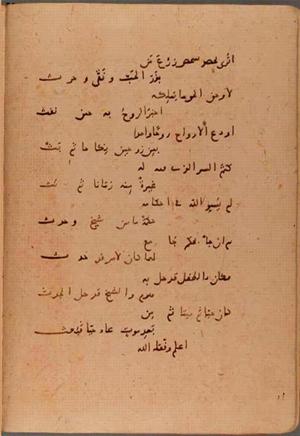
Do you suppose someone harvests the crop of one
Who sowed the grain, weeded, and plowed?
No, by the Real’s right, he does not own it.
The spirit reported this when it breathed.
He placed one spirit within spirits,
In marriage between two mates, then spread them.
For a time he concealed the secret within it
Out of jealousy for it, then divulged.
God did not make equal in His rulings,
In wisdom, an old man and a youth.
If He brings a ruling common
To both, it is for an affair that has occurred.
It is as though old age has alighted upon the child,
And the old man has entered the grave.
He was alive, then dead; then
After death he became alive again and was raised.
(The Classes of God’s Men)
Know—may God grant you success—
Notes
Translator’s note TN6263-1: The poem’s subjects and pronouns remain compressed. The concealment couplet includes fīhi, “within it/him,” lahu, “for it/him,” and minhu, “from it/him,” around jealousy; the main does not identify a new bearer of the secret. Naththa is read as divulging or scattering it.