
Futmak · الفتوحات المكية · Meccan Revelations

The Meccan Revelations

Manuscript volume 2 · Page 95

Konya manuscript

Open Arabic sourceOpen English translation

Arabic

عن جميع النقائص إلاَّ الله تعالى نسي الرُّوح القدسي الأعلى، فقال: «ما في الوجود إلاَّ الله». فلما سئل في التَّفصيل، لم يوجد لديه تحصيل.

وإنما خصصوا الواو بالمضموم ما قبلها والياء بالمكسور ما قبلها لما ذكرناه؛ فصحت المفارقة بين الألف وبين الواو والياء: فالألف للذَّات والواو العليَّة للصفات والياء العليَّة للأفعال الألف للروح، والعقل صفته، وهو الفتحة. والواو: النفْس، والقبض صفتها، وهو الضمّة. والياء: الجسم، ووجود الفعل صفته، وهو الخفض. فإن انفتح ما قبل الواو والياء فذٰلك راجع إلى حال المخاطب، ولما كانتا غيراً ولابد اختلفت عليهما الصفات.

ولَمّا كانت الألف لا تقبل الحركات، اتّحدتْ بمدلولها، فلم يختلف عليها شيء أَلْبَتَّة. وسمّيت حروف العلّة لما نذكره: فألِف الذَّات علة لوجود الصفة وواو الصفة علة لوجود الفعل وياء الفعل علة لوجود ما يصدر عنه في عالَم الشهادة من حركة وسكون؛ فلهٰذا سميت عللاً.

ثم أوجد النون من هٰذا الاسم نصف دائرة في الشكل، والنصف الآخر محصور معقول في النقطة الَّتي تدل على النون الغيبيَّة الَّذي هو نصف الدَّائرة. ويحسب
English

from all imperfections except God, exalted is He, he forgets the highest holy spirit and says: “There is nothing in existence but God.” When asked for the particulars, however, he has no understanding to offer.

They specified wāw preceded by ḍammah and yā preceded by kasrah for the reason we have mentioned. Thus the distinction between alif, on the one hand, and wāw and yā, on the other, is established. Alif pertains to the Essence, wāw as a weak letter to the Attributes, and yā as a weak letter to acts. Alif pertains to the spirit; intellect is its attribute, represented by fatḥah. Wāw is the soul; contraction is its attribute, represented by ḍammah. Yā is the body; the existence of action is its attribute, represented by the lowered vowel. If the letter before wāw or yā takes fatḥah, this refers to the state of the one addressed. Since the two are necessarily other, their attributes vary.

Since alif does not receive vowel movements, it is united with what it signifies, and nothing varies upon it at all. They are called weak letters for the reason we shall now mention: the alif of the Essence is a cause of the attribute’s existence; the wāw of the attribute is a cause of the act’s existence; and the yā of the act is a cause of the movement and rest that issue from it in the visible world. This is why they are called causes.

He then brought forth the nūn of this Name in the shape of a semicircle. The other half is contained intelligibly within the dot, which indicates the unseen nūn constituting half the circle. People suppose—

Notes

Translator’s note TN415-1: The expression ḥurūf al-ʿillah ordinarily designates the weak letters, alif, wāw, and yā. The author also draws on ʿillah in the sense of “cause.” Fatḥah, ḍammah, and kasrah are the short vowels a, u, and i; “lowering” here refers to the i-vowel.

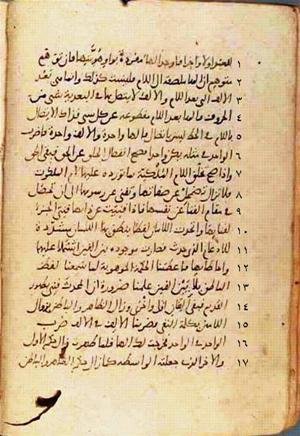
Manuscript imageManuscript volume 2 · Page 95

Arabic and English are linked by the same Konya page ID. Page alignment is approximate; consult the manuscript image for verification.

Cairo source reference

Ibn al-Arabi, The Meccan Revelations — Manuscript volume 2 · Page 95 — https://www.futmak.com/english/konya/pages.php?id=415&text=both