
Futmak · الفتوحات المكية · Meccan Revelations

The Meccan Revelations

Manuscript volume 9 · Page 246

Konya manuscript

Open Arabic sourceOpen English translation

Arabic

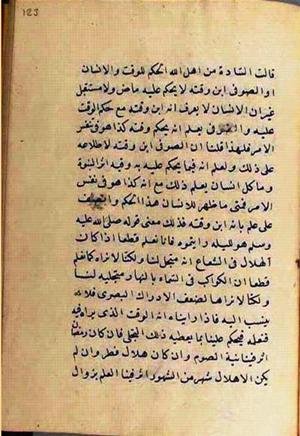
قالت السادة من أهل الله: «الحكم للوقت والإنسان أو الصوفي ابن وقته، لا يحكم عليه ماض ولا مستقبل».

غير أن الإنسان لا يعرف أنه ابن وقته مع حكم الوقت عليه، والصوفي يعلم أنه بحكم وقته. كذا هو في نفس الأمر؛ فلهٰذا قلنا: إن الصوفي ابن وقته، لاطلاعه على ذٰلك ولعلمه أن له فيما يحكم عليه به، وقته أثر النبوة، وما كل إنسان يعلم ذٰلك، مع أنه كذا هو في نفس الأمر.

فمتى ما ظهر للإنسان هٰذا الحكم واتصف على علم بأنه ابن وقته، فذٰلك معنى قوله صلى الله عليه وسلم: «هو لليلة رأيتموه».

فإنا نعلم قطعا إذا كان الهلال في الشعاع، إنه متجل لنا، ولكنا لا نراه؛ كما نعلم قطعا إن الكواكب في السماء بالنهار متجلية لنا، ولكنا لا نراها لضعف الإدراك البصري؛ فلا ننسب إليه (الرؤية).

فإذا رأيناه، فإنه للوقت الذي نراه فيه فنعلمه؛ فيحكم علينا بما يعطيه ذٰلك التجلي؛ فإن كان رمضان، أثر فينا نية الصوم، وإن كان هلال فطر، أثر فينا نية الفطر.

وإن لم يكن إلا هلال شهر من الشهور، أثر فينا العلم بزوال
English

The masters among the people of God said, “The ruling belongs to the moment. The human being, or the Sufi, is the child of his moment. Neither past nor future rules him.”

Yet the human being does not know that he is the child of his moment, despite the moment’s ruling over him, while the Sufi knows that he is under his moment’s rule. This is how it is in reality. We therefore say that the Sufi is the child of his moment, because he is aware of this and knows that in what his moment rules him by there is for him an effect of prophethood. Not every human being knows this, although this is how it is in reality.

Whenever this ruling becomes clear to a person and he knowingly takes on being the child of his moment, that is the meaning of his saying, may God bless him and grant him peace, “It belongs to the night on which you saw it.”

We know for certain that when the crescent is within the sun’s rays, it is manifest to us, though we do not see it, just as we know for certain that the stars in heaven are manifest to us by day, though we do not see them because of the weakness of visual perception. We therefore ascribe no sighting to it.

When we see it, it belongs to the moment in which we see and know it. It rules us according to what that self-disclosure gives. If it is Ramadan, it produces in us the intention to fast. If it is the crescent of breaking the fast, it produces in us the intention to break the fast.

If it is simply the crescent of one of the months, it produces in us knowledge of the passing of

Manuscript imageManuscript volume 9 · Page 246

Arabic and English are linked by the same Konya page ID. Page alignment is approximate; consult the manuscript image for verification.

Cairo source reference

Ibn al-Arabi, The Meccan Revelations — Manuscript volume 9 · Page 246 — https://www.futmak.com/english/konya/pages.php?id=2770&text=both