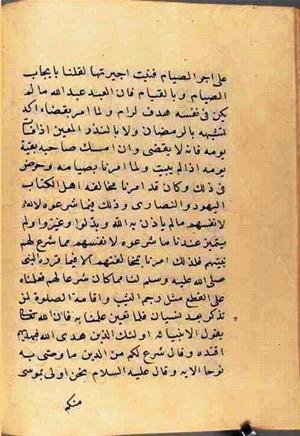
for the wage of fasting.
If its hireling were effaced, we would speak
of making fasting and standing obligatory.
The servant is God’s servant so long as
within himself there is no target for an archer.
(Fasting ʿĀshūrāʾ and Differing from the People of the Book)
By commanding it to be made up, he reinforced its resemblance to Ramadan, rather than to a vow for a particular day when that day has passed. That is not made up, even if the person refrains for the remainder of the day when he had not formed the intention by night.
He commanded us to fast it and urged this upon us, while also commanding us to differ from the People of the Book, the Jews and Christians. This concerns what they prescribed for themselves without God’s permission, and what they altered and changed. Since we could not distinguish what they prescribed for themselves from what their prophet prescribed for them, we were commanded to differ from them, except where the Prophet, may God bless him and grant him peace, confirmed for us what had been their revealed Law and we thus knew it with certainty, such as stoning a previously married person and performing prayer on remembering after forgetting.
Once it was specified, we acted on it. God, exalted is He, says concerning the prophets, “Those are the ones God guided, so follow their guidance” [al-Anʿam 6:90]. He says, “He has prescribed for you of religion what He enjoined upon Noah” [al-Shura 42:13], and so on in the verse. He, upon whom be blessings and peace, said, “We have a greater claim to Moses
Notes
Translator’s note TN2711-1: The wording about the soul’s “hireling” is compressed. Ajīratuhā is retained as a hired worker associated with the soul, following the preceding line about the wage of fasting. The final couplet retains the image of an archer’s target without specifying it further.