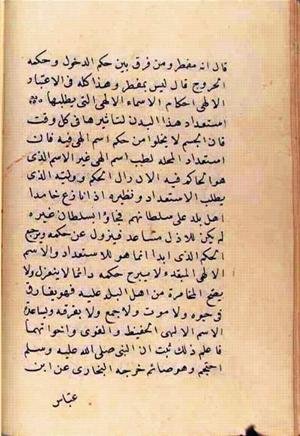
says that it breaks the fast.
Those who distinguish between the ruling for entering and that for leaving say it does not break the fast.
(Preparedness and the Succession of the Rulings of the Names)
All this, in the divine inward application, concerns the rulings of divine names that the preparedness of this body seeks so that they may affect it at every moment. The body is never without the ruling of a divine name within it.
If the locus becomes prepared to seek a divine name other than the one now ruling in it, that rule ceases and the one sought by its preparedness takes over.
Its likeness is a town whose people rebel against their ruler and bring another ruler. If the first has no supporter, his authority ceases and rule returns to the one sought by the preparedness. Rule therefore always belongs to preparedness.
The divine name the Nourisher never ceases to rule. It is not deposed, and the people of the town cannot rebel against it. It never leaves the body in life or death, gathering or separation. The divine names the Preserver and the Strong and their brothers aid it. Know this.
It is established that the Prophet, may God bless him and grant him peace, had cupping performed while fasting. Al-Bukhārī transmitted it from Ibn
Notes
Translator’s note TN2595-1: Preparedness (istiʿdād) is the capacity or disposition of the locus to receive a particular effect. The image of a change of ruler illustrates how one name’s rule succeeds another’s as that preparedness changes.