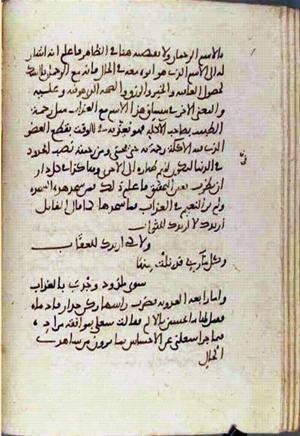
to the name the All-Merciful, although on the surface it does not call for punishment here. Know that he pointed his father to the name under which his father then stood. He was undoubtedly with the All-Merciful because of the well-being, good, provision, and health he enjoyed.
Another meaning of bringing this name together with punishment is like the mercy of a physician toward someone with gangrene. At that moment he causes him pain by cutting off the affected limb, out of mercy so that he may live. From His mercy He established fixed penalties in this world so that they might serve as purification for the next. This is so in every abode if you look with the eye of realization. Know this.
Whoever performs this prostration without seeing delight in punishment[78] has not performed it. As the speaker said,
I desire You. I do not desire You for reward,
but I desire You for punishment.
Of all my wishes I have had my fill,
save the sweetness of my ecstasy in torment.
As for Rābiʿah al-ʿAdawiyyah, her head struck the corner of a wall and bled. She was asked, “Do you not feel the pain?” She said, “Being occupied with consenting to His will in what occurred has distracted me from sensing what you see of the outward state.”
Notes
[78]
(This expression is connected to the author’s inward application of mercy in what causes pain and to the preceding example of the physician’s treatment. It should be read in that context.)
Translator’s note TN2143-1: The physical examples illustrate the author’s distinction between immediate pain and a merciful purpose perceived through it. Rābiʿah’s account concerns her absorption in consenting to the divine will.