
Futmak · الفتوحات المكية · Meccan Revelations

The Meccan Revelations

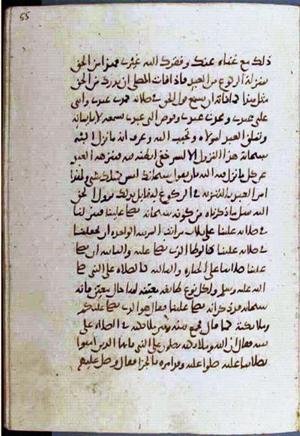
Manuscript volume 7 · Page 110

Konya manuscript

Open Arabic sourceOpen English translation

Arabic

ذٰلك، مع غناه عنك، وفقرك إليه، غيري؟

فهٰذا من الحق بمنزلة الركوع من العبد، فإذا فات المصلي أن يدرك من الحق مثل هٰذا، كما فاته أن يسمع قول الحق في صلاته: «حمدني عبدي وأثنى على عبدي ومجدني عبدي وفوض إلى عبدي»، بسمعه لا بإيمانه، وتملق العبد لمولاه، وتحبب إليه، وعرف أنه ما نزل إليه سبحانه هٰذا النزول، إلا لسر خفي أبطنه فيه.

فينزهه العبد عن كل ما نزل فيه إليه، بأن يقول: «سبحانك ليس كمثلك شيء»، ولهٰذا أمر العبد بالتنزيه في الركوع، ليقابل بذٰلك نزول الحق إليه بمثل ما ذكرناه، من كونه سبحانه يصلي علينا.

(مراتب الصلاة على العباد)

فينزلنا في صلاته علينا على ثلاث مراتب: المرتبة الواحدة أن يجعلنا في صلاته علينا كالوطاء الذي نصلي عليه.

والثانية أن يصلي علينا صلاتنا على الجنازة.

والثالثة كالصلاة على النبي صلى الله عليه وسلم، ولكل نوع طائفة معينة، لها حال معين، فإنه سبحانه قد ذكر أنه يصلي علينا فقال: ﴿هُوَ الَّذِي يُصَلِّي عَلَيْكُمْ ومَلائِكَتُهُ﴾ [الأحزاب: ٤٣] كما قال، فجمع بينه وبين ملائكته في الصلاة على نبيه فقال: ﴿إن الله وملائكته﴾ ﴿يُصَلُّونَ عَلَى النَّبِيِّ[46] يا أَيُّهَا الَّذِينَ آمَنُوا﴾ [الأحزاب: ٥٦]، بصلاتنا عليه ﴿صَلُّوا عَلَيْهِ﴾.

وقد أمره بالجزاء فقال: ﴿وصَلِّ عَلَيْهِمْ

Notes

[46]

(ضُبط الاستشهاد هنا على «إن الله وملائكته يصلون على النبي» من سورة الأحزاب، بمقابلة الطبعة الأحدث.)
English

that for you besides Me, when He has no need of you and you are in need of Him?

This is to the Real what bowing is to the servant. The one at prayer may fail to perceive something like this from the Real, just as he fails to hear with his hearing, as distinct from believing it in faith, what the Real says in his prayer: “My servant has praised Me. My servant has extolled Me. My servant has glorified Me. My servant has entrusted his affairs to Me.” The servant entreats his Master, seeks His love, and knows that He, glory be to Him, came down to him in this way only because of a hidden secret He placed within him.

The servant therefore declares Him incomparable with respect to everything in which He came down to him, saying, “Glory be to You. Nothing is like You.” This is why the servant was commanded to declare Him incomparable in bowing. He thereby responds to the Real’s coming down to him in the way we have mentioned, inasmuch as He, glory be to Him, prays over us.

(The Ranks of Prayer over the Servants)

In His prayer over us He places us in three ranks. The first is that in His prayer over us He makes us like the mat on which we pray.

The second is that He prays over us as we pray over the dead.

The third is like the prayer upon the Prophet, may God bless him and grant him peace. Each kind is for a particular group with a particular state. He, glory be to Him, mentioned that He prays over us when He said, “It is He who prays over you, and so do His angels” [al-Ahzab 33:43]. Likewise, He joined Himself and His angels in prayer upon His Prophet, saying, “God and His angels” “pray upon the Prophet.[46] O you who believe” [al-Ahzab 33:56], with regard to our prayer upon him, “pray upon him.”

God commanded him to reciprocate, saying, “Pray over them.

Notes

[46]

(The quotation here was corrected to read “God and His angels pray upon the Prophet,” from Sūrat al-Aḥzāb, by comparison with the newer edition.)

Translator’s note TN2004-1: The Arabic uses ṣalāh for the ritual prayer, for prayer over the dead, and for what God, the angels, and believers do for the Prophet. “Pray over” and “pray upon” preserve that shared wording, even where “bless” is a more familiar translation for God’s action.

Manuscript imageManuscript volume 7 · Page 110

Arabic and English are linked by the same Konya page ID. Page alignment is approximate; consult the manuscript image for verification.

Cairo source reference

Ibn al-Arabi, The Meccan Revelations — Manuscript volume 7 · Page 110 — https://www.futmak.com/english/konya/pages.php?id=2004&text=both