
Futmak · الفتوحات المكية · Meccan Revelations

The Meccan Revelations

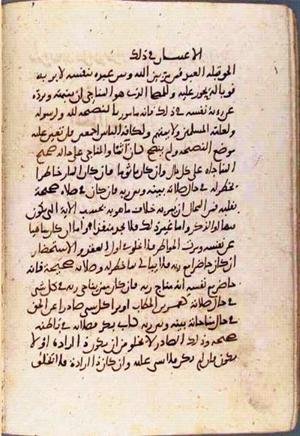
Manuscript volume 7 · Page 87

Konya manuscript

Open Arabic sourceOpen English translation

Arabic

الاعتبار في ذٰلك

الحق قبلة العبد، فمن مر بين الله وبين عبده، بنفسه لا بربه، فوباله يحور عليه، وللمصلي، الذي هو المناجي أن ينبهه، ويرده عن رؤية نفسه في ذٰلك، فإنه مأمور بالنصيحة لله، ولرسوله، ولعامة المسلمين، ولأئمتهم، ولكافة الناس أجمعين.

فإن تعين عليه موضع النصيحة، ولم ينصح، كان آثما، والمناجي على حاله صحيح المناجاة على كل حال، وإن كان مأثوما.

(مرور الخاطر وحضور القلب)

فإن كان المار خاطرا يخطر له في حال صلاته بينه وبين ربه، فإن كان في صلاة صحيحة بقلبه، فمن المحال أن يمر به خلاف ما هو به، بحسب الآية التي يكون فيها، أو الذكر، وأما غير ذٰلك فلا يجد (الخاطر) منفذا.

وأما إن كان ساهيا عن نفسه، ومرت الخواطر، فلا يخلو في أول العقد والاستحضار، إن كان حاضرا مع ربه، فلا يبالي بما خطر له، وصلاته صحيحة، فإنه حاضر مع نفسه إنه مناج ربه.

فإن كان ممن يناجي ربه في كل شيء في حال صلاته، كعمر بن الخطاب، أو يرى كل شيء صادرا عن الحق في حال مناجاته بينه وبين ربه، كأبي بكر، فصلاته في باطنه صحيحة.

و ذٰلك الصادر لا يخلو من أن يكون ذا إرادة، أو لا يكون، فإن لم يكن فلا شيء عليه، وإن كان ذا إرادة، فلا يخلو
English

Its Inward Application

The Real is the servant’s qibla. Whoever passes between God and His servant through himself, acting apart from his Lord, has the ill consequence return upon him. The person praying, who is engaged in intimate converse, may alert the passerby and turn him away from seeing himself as the agent in the matter. He has been commanded to show sincere good faith to God, to His Messenger, to ordinary Muslims and their leaders, and to all people without exception.

If it falls to him to give counsel and he fails to do so, he incurs sin. The person engaged in intimate converse continues in his state, and his converse is valid in every case, even if he has incurred sin.

(Passing Promptings and Presence of the Heart)

If the passerby is a prompting that crosses his mind in prayer between him and his Lord, and the prayer is sound in his heart, it is impossible for anything contrary to what he is engaged in to pass through him, in accordance with the verse or remembrance he is occupied with. The prompting finds no opening for anything else.

If he is heedless of himself and promptings pass through, the issue turns on his initial undertaking of prayer and bringing to presence. If he was present with his Lord then, he pays no heed to what occurs to him, and his prayer is valid. He remains aware in himself that he is conversing intimately with his Lord.

If he is one who converses intimately with his Lord in every thing during prayer, like ʿUmar ibn al-Khaṭṭāb, or one who sees every thing as proceeding from the Real while he converses intimately with his Lord, like Abū Bakr, his prayer is inwardly valid.

What proceeds in this way either has a will or lacks one. If it lacks a will, nothing is incumbent on it. If it has a will, it must be

Notes

Translator’s note TN1981-1: “Sincere good faith” renders naṣīḥah. Toward a passerby it takes the form of counsel, by calling his attention to how he understands his own action.

Manuscript imageManuscript volume 7 · Page 87

Arabic and English are linked by the same Konya page ID. Page alignment is approximate; consult the manuscript image for verification.

Cairo source reference

Ibn al-Arabi, The Meccan Revelations — Manuscript volume 7 · Page 87 — https://www.futmak.com/english/konya/pages.php?id=1981&text=both