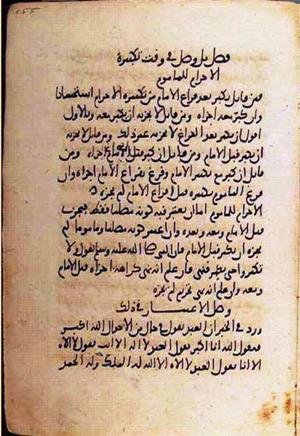
Section, or Rather Continuation, on When the Follower Makes the Opening Proclamation of Consecration
[89]Some say that it is preferable for the follower to proclaim God’s greatness after the prayer leader finishes the opening proclamation of consecration, though it suffices if he says it at the same time. Others say it does not suffice to say it at the same time. I hold the first view, that he should say it after the prayer leader finishes. Nothing else suffices.
Some say it does not suffice for him to say it before the prayer leader. Others say that if he says it before the prayer leader, it suffices. Others say that if he says it at the same time as the prayer leader and finishes when the leader finishes, it suffices. If the follower finishes his proclamation before the prayer leader finishes, it does not suffice.
(The Inward Application of Praying and Following)
The follower’s consecration may be considered in respect of his being a worshipper alone, in which case it suffices before, with, or after the prayer leader. If it is considered in respect of his being both a worshipper and a follower, it does not suffice for him to proclaim God’s greatness before the prayer leader. The Prophet, may God bless him and grant him peace, says, “Do not proclaim God’s greatness until he does,” thereby prohibiting it. If one knows that this prohibition conveys disapproval, saying it before or with the prayer leader suffices. If one knows that it makes the act forbidden, it does not suffice.
Continuation on the Inward Application of This
It is related in a report that the servant says in one of his states, “God is greatest,” and God says, “I am greatest.” The servant says, “There is no god but You,”[90] and He says, “There is no god but Me.” The servant says, “There is no god but God. To Him belong kingship and praise,”
Notes
[89]
(The incomplete phrase “The jurists’ positions on” was removed. The detailed discussion in the newer edition begins “Some say.”)
[90]
(“There is no God but You,” with the proper name Allāh where the common noun “god” would be expected, was corrected to “There is no god but You” by comparison with the newer edition.)
Translator’s note TN1882-1: The first position stated allows a simultaneous proclamation, but the author’s endorsement of “the first view” is immediately followed by “Nothing else suffices.” Both assertions appear in this order in the Arabic.