Futmak · الفتوحات المكية · Meccan Revelations

The Meccan Revelations

Manuscript volume 1 · Page 114

Konya manuscript

Open Arabic sourceOpen English translation

Arabic

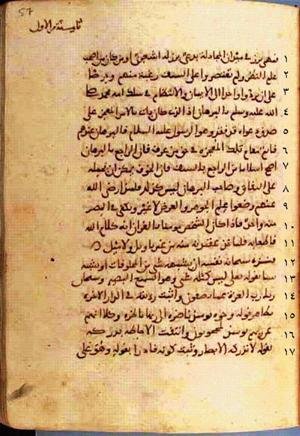
فمهما بَرَزَ في ميدان المجادلة بِدعيٌّ بَرَزَ له أشعريٌّ أو مَن كان مِن أصحاب علم النَّظر ولَم يقتصروا على السَّيف رغبةً منهم وحرصاً على أن يردّوا واحداً إلى الإيمان والانتظام في سلك أمَّة محمَّد صلَّى الله عليه وسلَّم بالبرهان، إذِ الَّذي كان يأتي بالأمر المعجِز على صدق دعواه قد فُقد وهو الرَّسول عليه السَّلام،

فالبرهان عندهم قائمٌ مقام تلك المعجزة في حقِّ من عَرف؛ فإنَّ الرَّاجع بالبرهان أصحُّ إسلاماً من الرَّاجع بالسَّيف فإنَّ الخوف يمكن أن يحمله على النِّفاق وصاحب البرهان ليس كذٰلك.

فلهٰذا رضي الله عنهم وضعوا علم الجوهر والعَرَض لا غير، ويكفي في المِصر منه واحدٌ، فإذا كان الشَّخص مؤمناً بالقرآن أنَّه كلام الله قاطعاً به فليأخذ عقيدته منه من غير تأويلٍ ولا ميلٍ.

(أسس العقيدة الإسلامية من القرآن الكريم، من غير الحاجة إلى علم الكلام)

فنَزَّه سبحانه نفسه أن يُشبِهه شيءٌ من المخلوقات أو يُشبهَ شيئاً بقوله تعالى: ﴿لَيْسَ كَمِثْلِهِ شَيْ‏ءٌ وَ هُوَ السَّمِيعُ الْبَصِيرُ﴾ [الشورى: ١١]، و﴿سُبْحانَ رَبِّكَ رَبِّ الْعِزَّةِ عَمَّا يَصِفُونَ﴾ [الصافات: ١٨٠].

وأثبت رؤيته في الدَّار الآخرة بظاهر قوله: ﴿وُجُوهٌ يَوْمَئِذٍ ناضِرَةٌ إِلى‏ رَبِّها ناظِرَةٌ﴾ [القيامة: ٢٢، ٢٣]، و﴿كَلَّا إِنَّهُمْ عَنْ رَبِّهِمْ يَوْمَئِذٍ لَمَحْجُوبُونَ﴾ [المطففين: ١٥].

وانتفت الإحاطة بدركه بقوله: ﴿لا تُدْرِكُهُ الْأَبْصارُ﴾ [الأنعام: ١٠٣].

وثبت كونه قادراً بقوله: ﴿وَهُوَ عَلى‏

English

Whenever an innovator stepped into the arena of disputation, an Asharite—or another practitioner of speculative reasoning—stepped forward to meet him. They did not confine themselves to the sword, because they desired and eagerly sought to bring even one person back to faith and into the ranks of Muhammad’s community through demonstration. For the one who produced a miraculous act as proof of his claim—the Messenger, peace be upon him—was no longer present.

For those who understand it, demonstration thus takes the place of that miracle. The Islam of someone who returns through demonstration is sounder than that of someone who returns through the sword: fear may induce hypocrisy, whereas this does not apply to the person persuaded by demonstration.

For this reason they—may God be pleased with them—established the science of substance and accident, and for no other reason. One practitioner in a city suffices. If a person believes with certainty that the Qur’an is God’s speech, let him take his belief from it without interpretive redirection or deviation.

(The Foundations of Islamic Belief in the Noble Qur’an, without Recourse to Dialectical Theology)

He, glory be to Him, declares Himself free of resembling anything created, or anything created resembling Him, by saying: “There is nothing like Him, and He is the All-Hearing, the All-Seeing” [Qur’an 42:11], and “Glory be to your Lord, the Lord of Might, above what they ascribe” [37:180].

He affirms that He will be seen in the next abode through the outward sense of His sayings: “Faces on that day will be radiant, looking toward their Lord” [75:22–23], and “No indeed! On that day they will be veiled from their Lord” [83:15].

Comprehending Him fully through perception is denied by His saying: “Eyes do not comprehend Him” [6:103].

His being powerful is established by His saying: “He has power over—

Manuscript imageManuscript volume 1 · Page 114

Arabic and English are linked by the same Konya page ID. Page alignment is approximate; consult the manuscript image for verification.

Cairo source reference

Ibn al-Arabi, The Meccan Revelations — Manuscript volume 1 · Page 114 — https://www.futmak.com/english/konya/pages.php?id=114&text=both