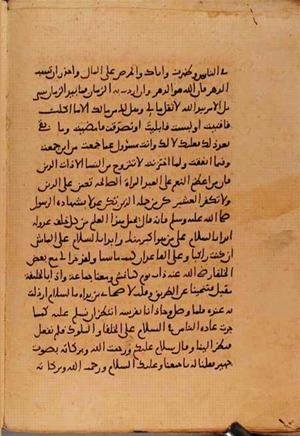
and become manifest among people.
Beware of greed for wealth. Beware of reviling Time, for God is Time. If by it you mean time as duration, nothing lies in time's hands: the affair is in God's hand. Do not say, “My wealth.” What do you possess of your wealth except what you ate and consumed, what you wore and wore out, or what you gave in charity and sent ahead?
Whatever remains after that counts against you, not for you. You are answerable for what you gathered: from where you gathered it, on what you spent it, and why you stored it up. Marry only a religious woman, for one of the greatest blessings upon a servant is a righteous wife who helps him in religion and is not ungrateful to her spouse.
(Knowledge and the Etiquette of Greeting)
Be among the bearers of religion, and you will be upright according to the testimony of the Messenger, God bless him and grant him peace, for he said: “The upright of each succeeding generation will bear this knowledge.” Be the first to greet those older than you. Be the first to greet a person walking if you are riding, and a person seated if you are walking.
Something happened to me one day with one of the caliphs, may God be pleased with him. We were walking with a group when the caliph approached, so we stepped aside from the road. I told my companions: “Whoever greets him first, I will disparage him before him.”
When he reached us and came alongside on his horse, he waited for us to greet him, as people customarily do when greeting caliphs and kings, but we did not. He looked at us and said in a loud voice: “Peace be upon you, and God's mercy and blessings.” We all replied: “And upon you be peace, and God's mercy and blessings.”
Notes
Translator’s note: The source distinguishes dahr (“Time,” in the cited saying) from zamān (temporal duration); the passage directs attention to God as the disposer of events rather than to time as an independent agent.
Translator’s note: The unvocalized phrase wa-lā takfur al-ʿashīr is read here as continuing the description of the righteous wife. It can also be read as direct counsel to the addressee against ingratitude to one’s spouse.