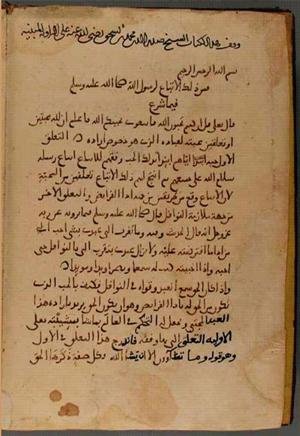
In the name of God, the All-Merciful, the Most Merciful.
Among these is following His messenger, may God bless him and grant him peace, in what he prescribes.
He, exalted is He, said, “Say: If you love God, follow me; God will love you” [Al ʿImran 3:31]. Know that God has two loves, or two relations: His love for His servants is a particular kind of will. The first relation is His initial love for them. Through that love He grants them success in following His messengers, God’s peace upon them all.
(Love through Obligatory and Supererogatory Acts)
Following then produces for them two relations of love, for it occurs through two ways: performing obligatory acts, and the other relation through adhering to supererogatory acts.
He, may God bless him and grant him peace, relates from his Lord, mighty and majestic is He, in the report, which includes: “My servant draws near Me through nothing more beloved to Me than performing what I have made obligatory upon him. My servant continues drawing near Me through supererogatory acts until I love him. When I love him, I become hearing, sight, a hand, and a supporter for him.”
If the Real is the servant’s hearing and faculties through supererogatory acts, what of the Real’s love for him through performing obligatory acts? The Real wills through this elect servant’s will, giving him governance in the world through whatever he wills, by His will’s initial relation through which He granted him success. This relation is included in the first, His saying, “You do not will unless God wills” [al-Insan 76:30].
Every attribute mentioned by the Real
Notlar
Translator’s note TN4697-1: The two relations yielded by following are retained after the initial relation of divine love, without reducing the stated sequence to a single count. The report’s final unvowelled muʾayyidan is read actively as supporter; the passive ‘one supported’ is also possible. Its supplied term is retained.